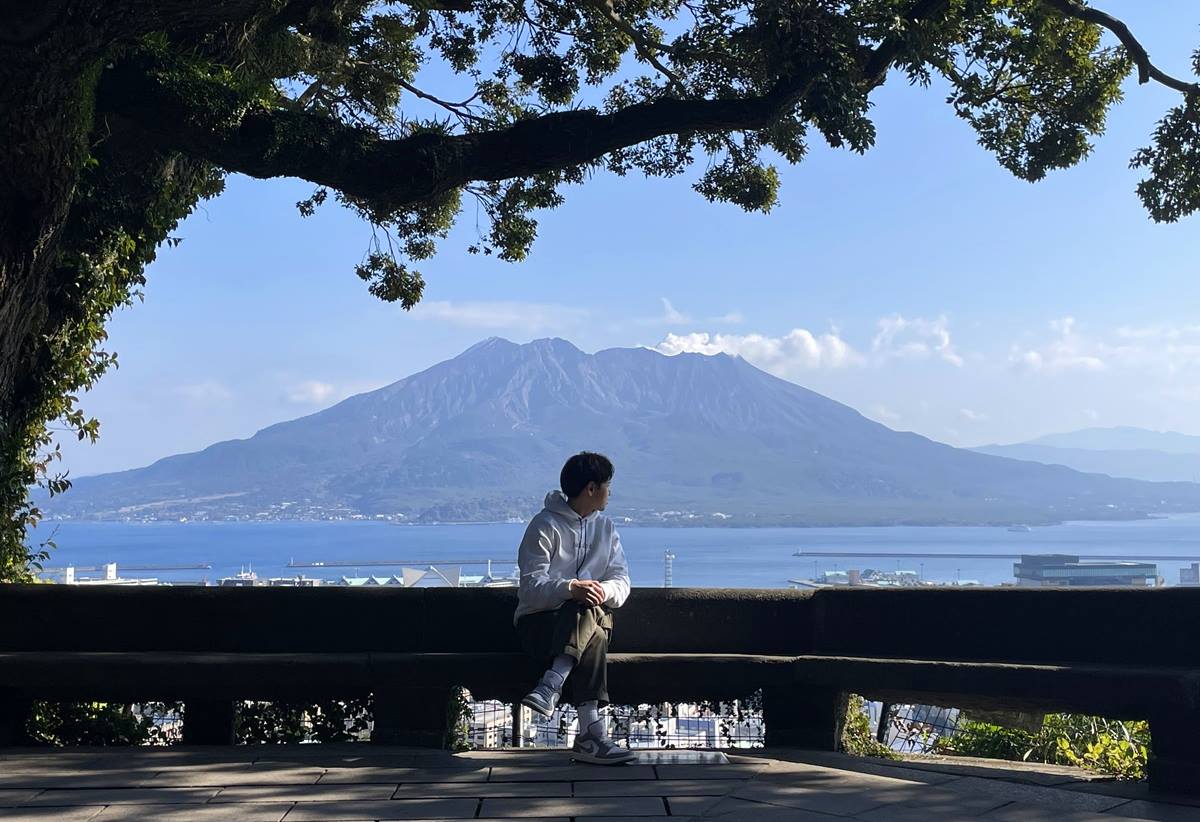
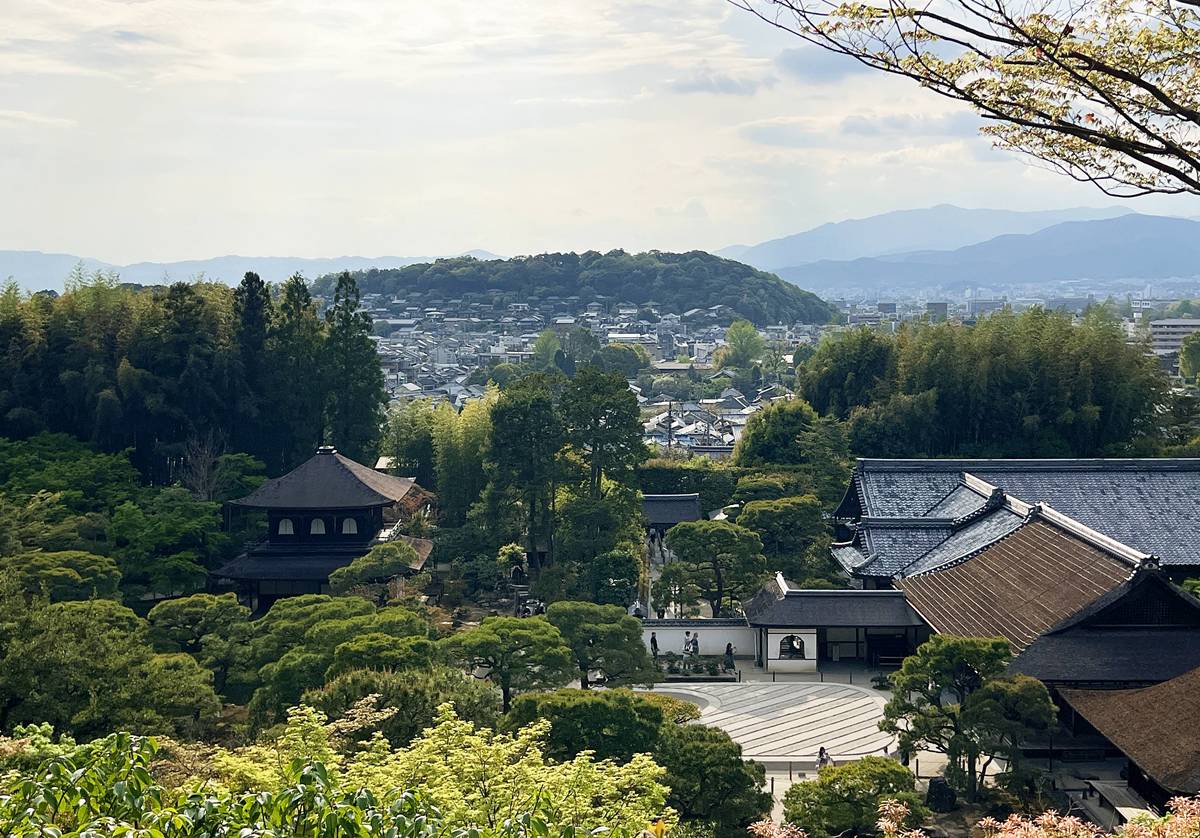
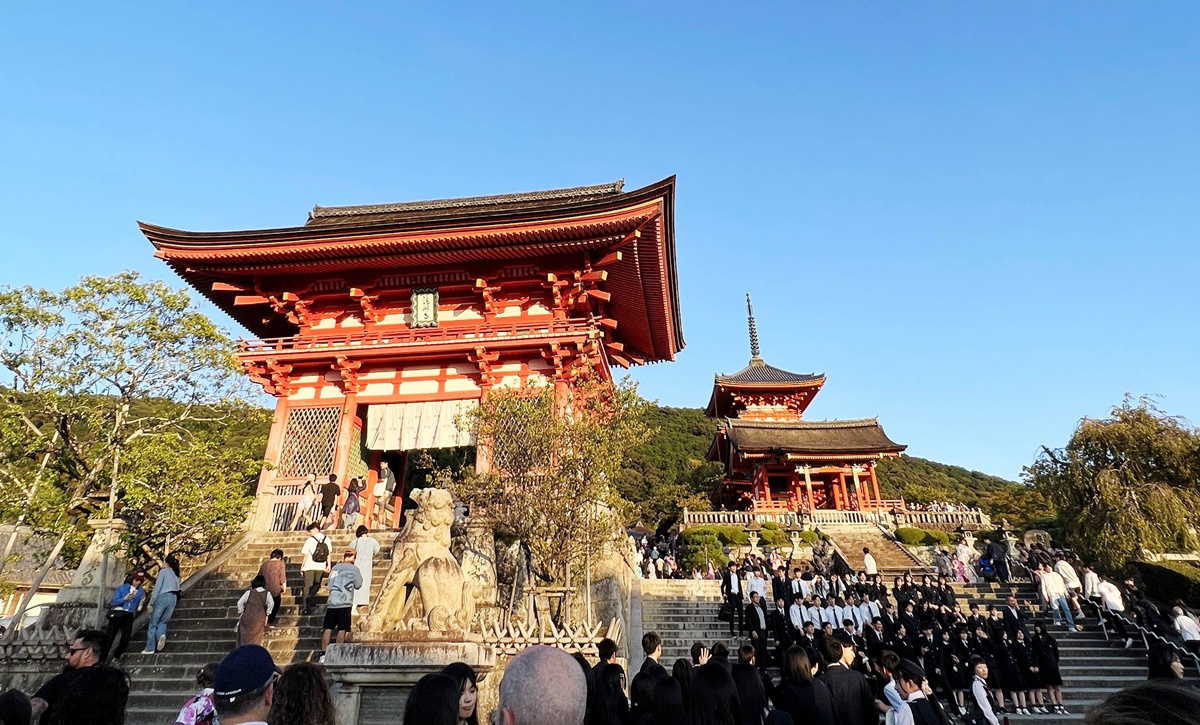
Kiyomizu-dera Temple is one of Kyoto’s most iconic landmarks, known for its magnificent wooden stage, mountain scenery, and centuries of Buddhist history.
Yet beyond the famous photographs lies another side of Kyoto—one shaped by prayer, traditional craftsmanship, historic streets, and the everyday lives of people who have gathered around this sacred mountain for generations.
專題大綱
- Explore Kiyomizu-dera Temple in Kyoto
- Before You Go: Kiyomizu-dera Temple Essentials
- Six Moments Inside Kiyomizu-dera Temple
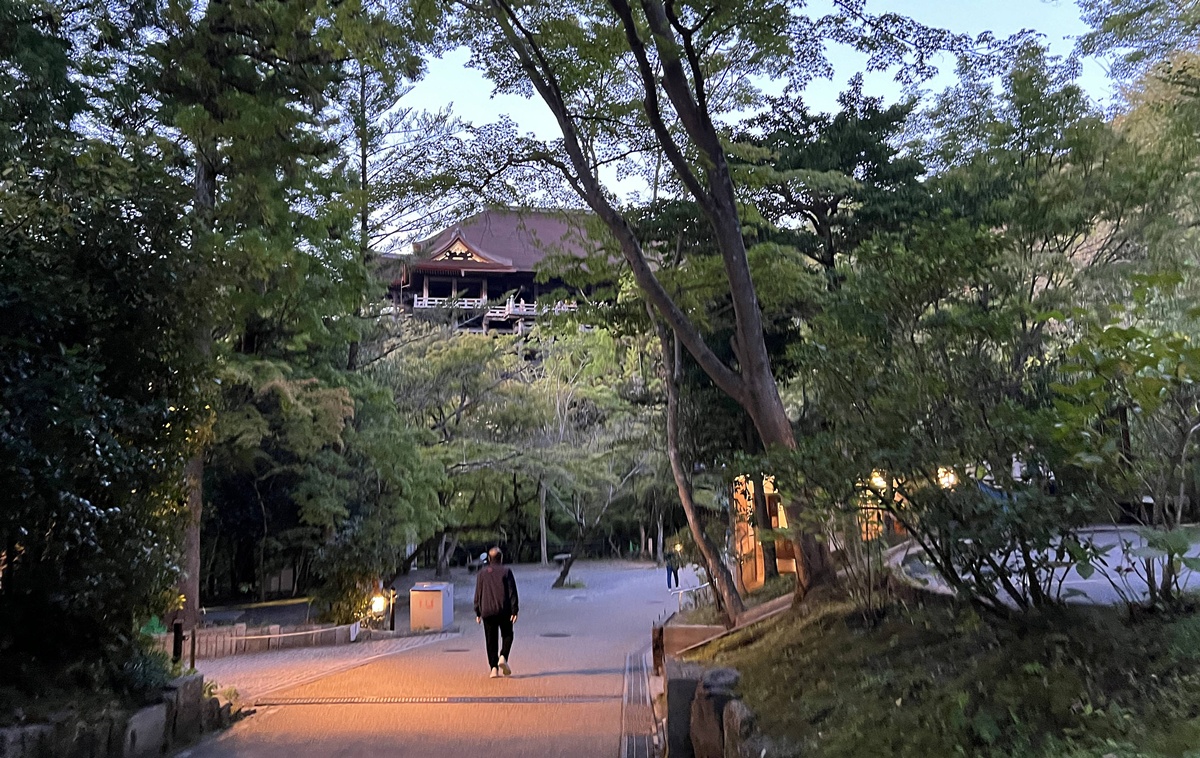
- 1. Experience Kiyomizu-dera Before the Crowds Arrive
- 2. Stand on the Famous Kiyomizu Wooden Stage
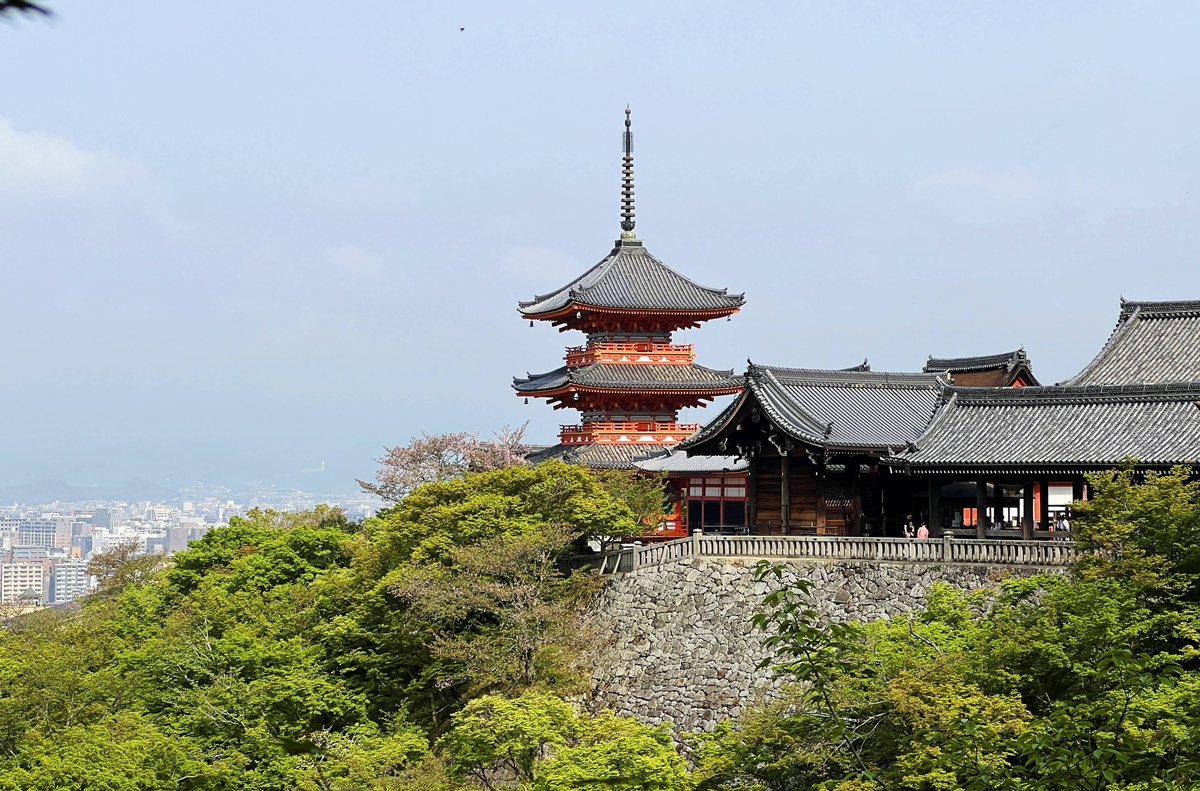
- 3. Look Beyond the Red Three-Story Pagoda
- 4. Make a Wish at Otowa Waterfall
- 5. See How the Seasons Transform the Same Temple
- 6. Pause and Feel the Mountain Breeze
- Six Moments Along Kyoto’s Historic Higashiyama Streets
- 7. Discover Kyoto’s Traditional Crafts Along Kiyomizu-zaka
- 8. Walk Slowly Through Sannenzaka
- 9. Discover How Ninenzaka Keeps Old Kyoto Alive
- 10. Find Kyoto’s Most Recognizable View at Yasaka Pagoda
- 11. Experience Kyoto’s Shinto Traditions at Yasaka Shrine
- 12. Return to Higashiyama After Dark
- How to Experience Kiyomizu-dera Differently: A Higashiyama Walking Route
- Final Thoughts: The Journey Is Part of the Temple
Explore Kiyomizu-dera Temple in Kyoto
The experience begins long before you reach the temple. Along the stone-paved streets of Sannenzaka and Ninenzaka, traditional wooden townhouses stand beside tea shops, pottery stores, and small businesses welcoming visitors from around the world.
Coming from Taiwan, where temple visits and making wishes are familiar parts of everyday life, I’ve always been fascinated by how Japan preserves similar traditions in its own distinctive way.
At Kiyomizu-dera, faith is not confined to the temple buildings. It is woven into the streets, the architecture, the changing seasons, and the quiet moments when visitors pause to make a wish.
Here are 12 moments worth experiencing around Kiyomizu-dera Temple, from its famous wooden stage and sacred waterfall to the historic streets of Higashiyama.
Before You Go: Kiyomizu-dera Temple Essentials
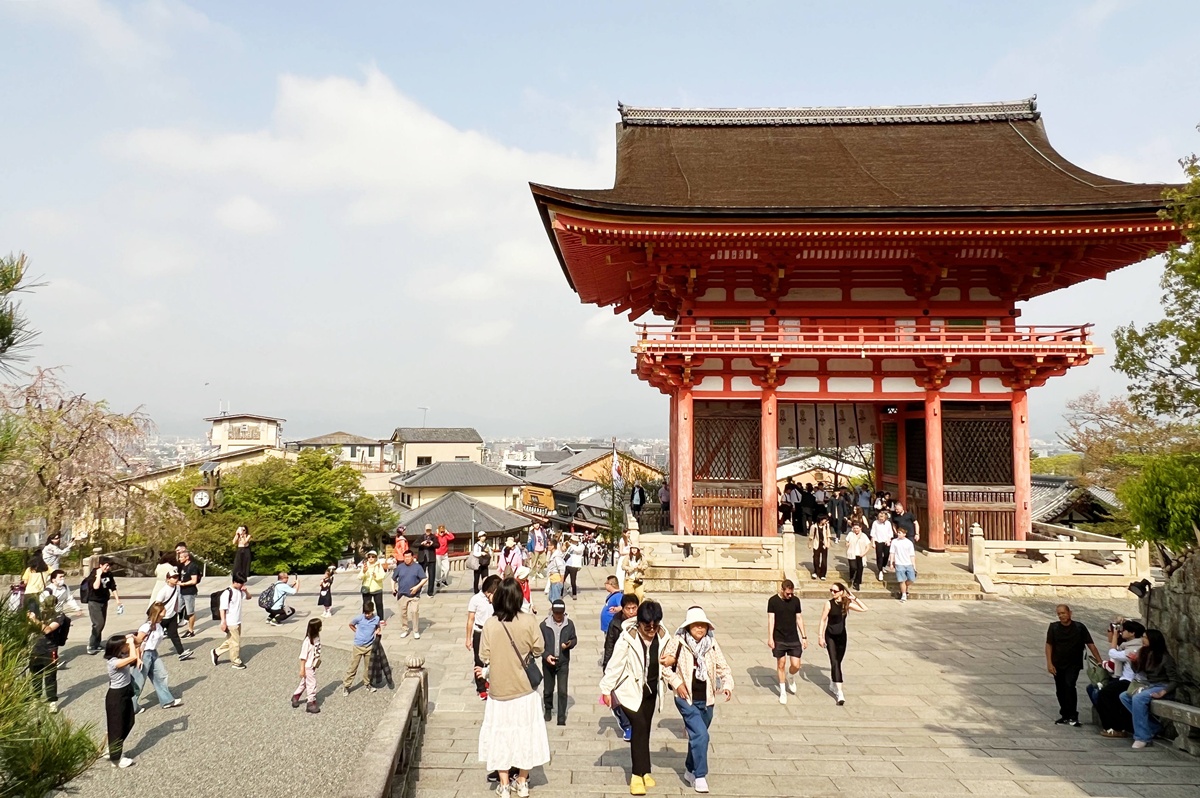
Located in eastern Kyoto, Kiyomizu-dera was founded in 778 and is part of the UNESCO World Heritage listing Historic Monuments of Ancient Kyoto. The temple is dedicated to Kannon, the Buddhist deity of compassion, and takes its name from the sacred waters of Otowa Waterfall.
Opening Hours: Generally from 6:00 AM, with closing times varying by season.
Admission: A ticket is required for the main temple area. Check the official website for current prices and special opening schedules.
Getting There: From Kyoto Station, take a Kyoto City Bus toward Higashiyama and walk approximately 15–25 minutes uphill from the nearest convenient stop, depending on your route.
Recommended Time: Allow 1–2 hours for the temple or 3–5 hours to explore the surrounding Higashiyama district.
Best Time to Visit: Early morning for fewer crowds, spring for cherry blossoms, and autumn for colorful maple leaves.
CJSCENE Tip: Rather than visiting Kiyomizu-dera as an isolated attraction, combine it with a downhill walk through Sannenzaka, Ninenzaka, and Yasaka Pagoda toward Gion.
Six Moments Inside Kiyomizu-dera Temple
1. Experience Kiyomizu-dera Before the Crowds Arrive
Best Time: 6:00–8:00 AM
Most travelers know Kiyomizu-dera for its crowds and famous photographs. Yet arriving shortly after sunrise reveals an entirely different atmosphere.
Morning light gradually reaches the wooden buildings, birds can be heard around the rooftops, and the mountain air feels cooler than in the city below. Without the busiest sightseeing groups, the temple’s original purpose as a place of worship becomes easier to appreciate.
Rather than rushing toward the famous wooden stage, take a moment to notice the weathered timber, stone pathways, and quiet movements of early visitors.
Sometimes, the most memorable way to experience a famous landmark is simply to arrive before the city fully wakes up.
2. Stand on the Famous Kiyomizu Wooden Stage
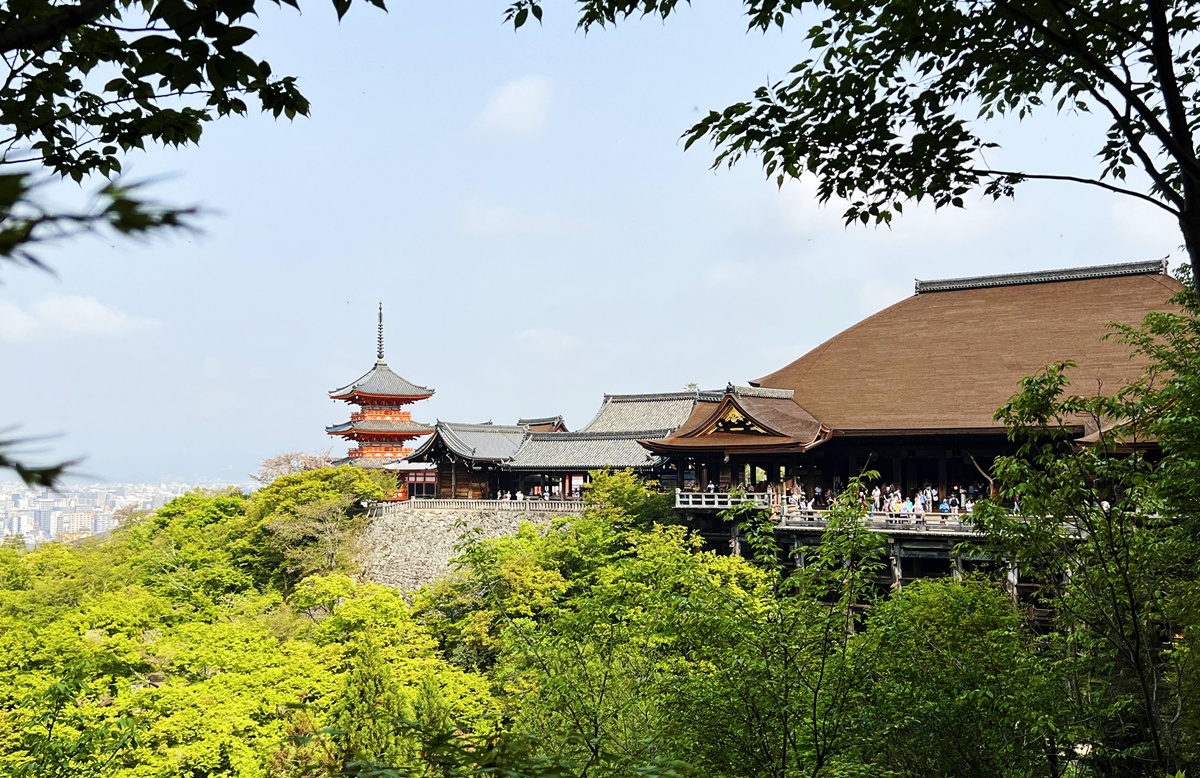
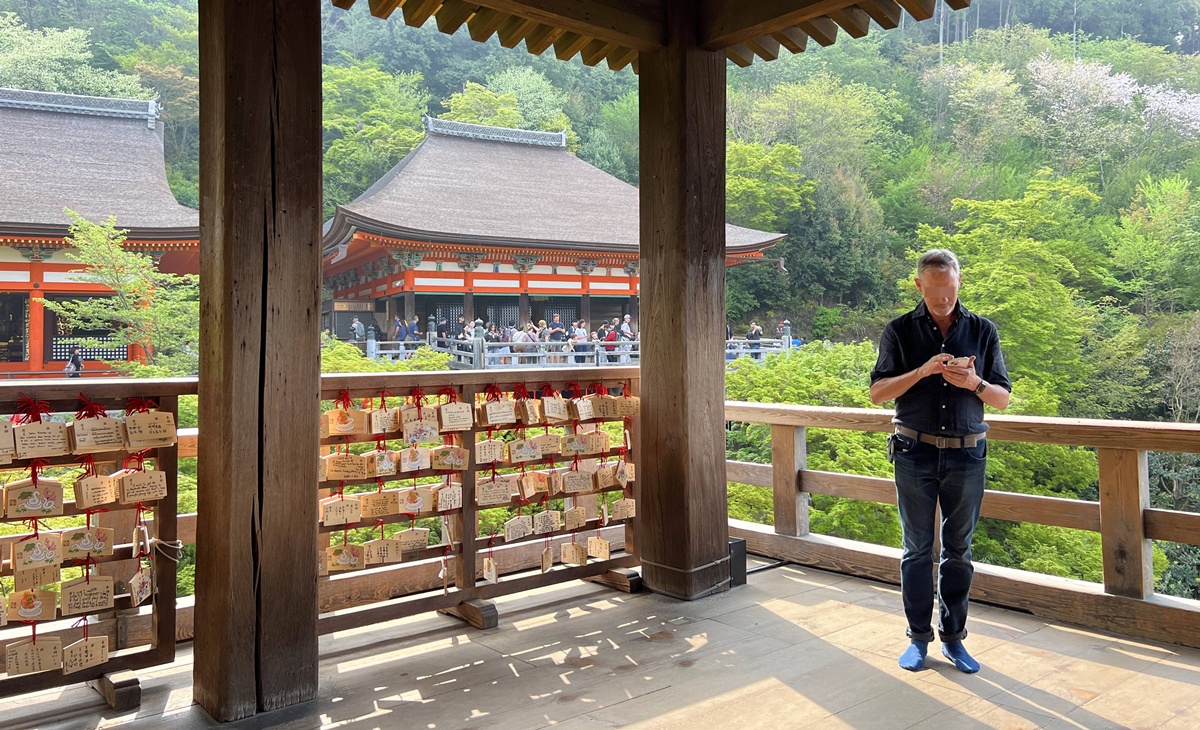
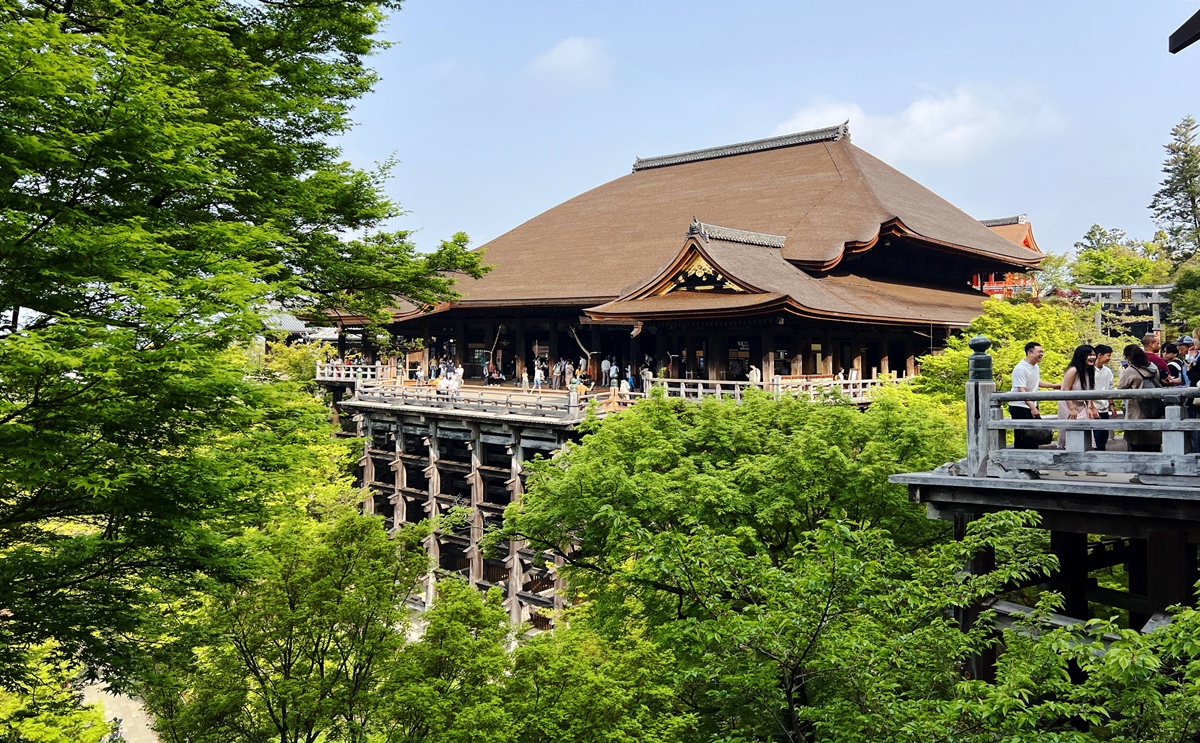
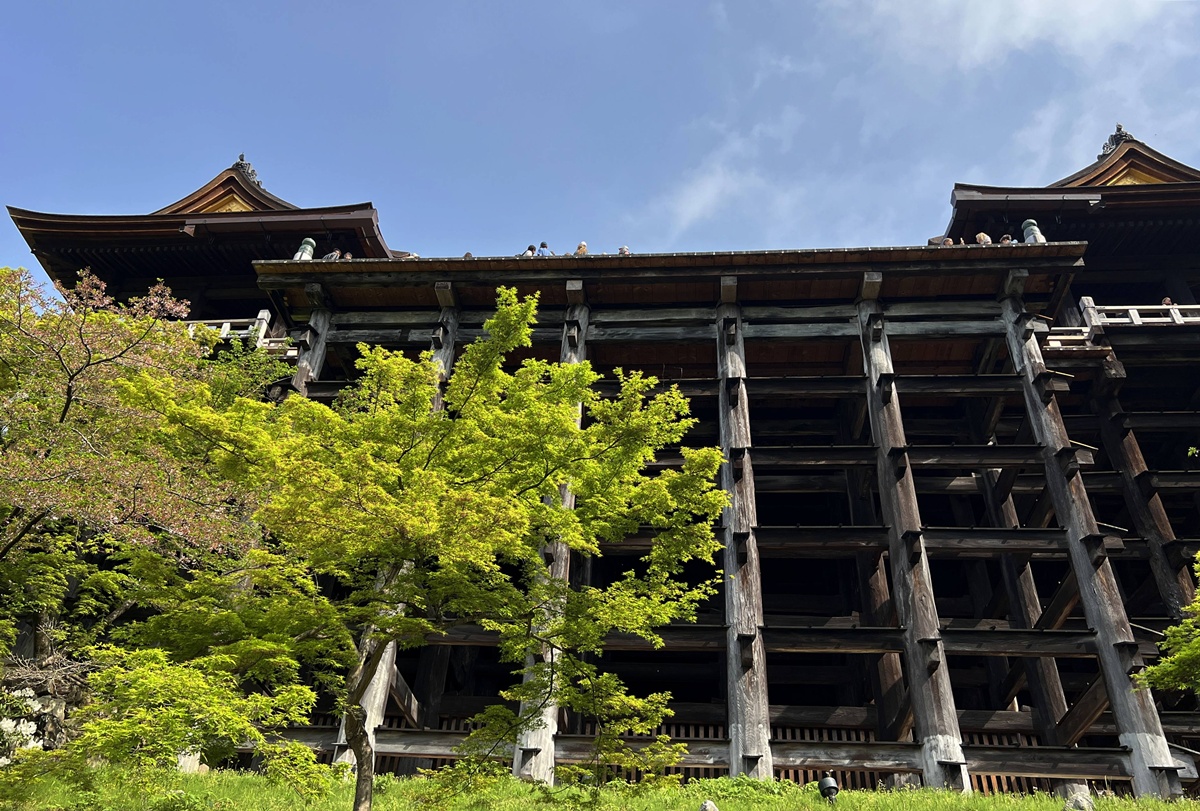
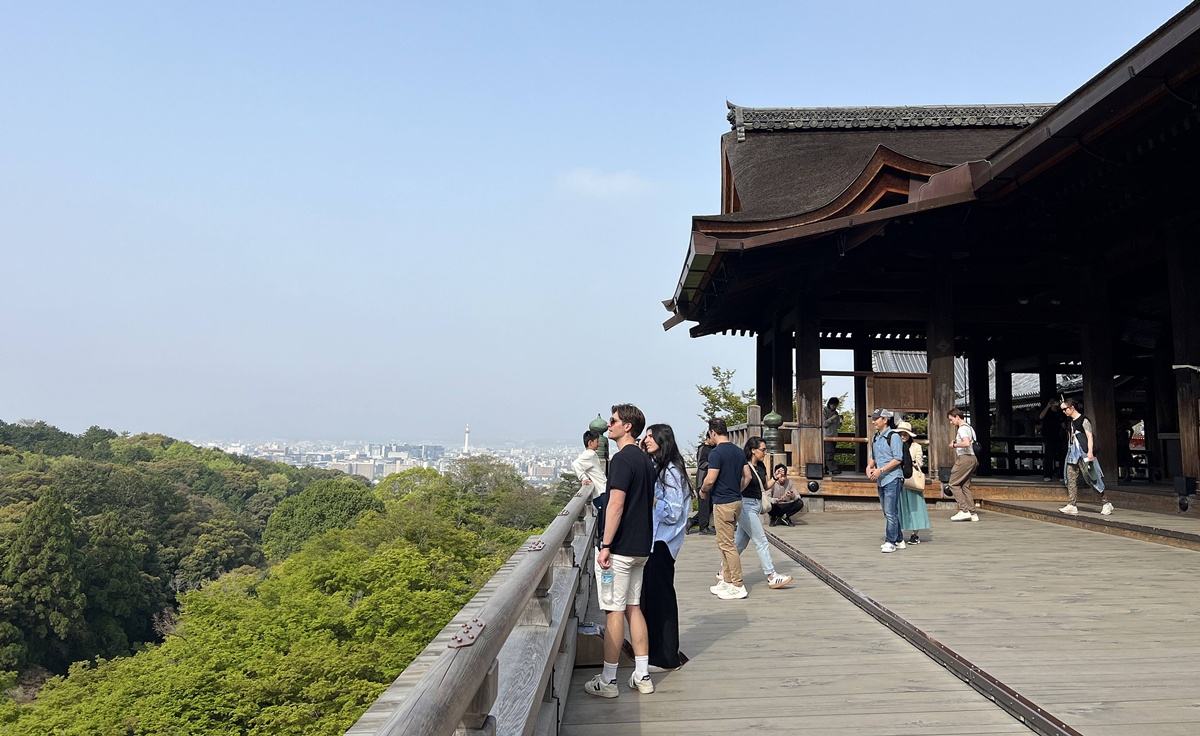
The enormous wooden stage extending from Kiyomizu-dera’s Main Hall is one of Japan’s most remarkable examples of traditional timber architecture.
Supported by a complex framework of wooden pillars and beams, the stage rises above a steep hillside, offering panoramic views across the surrounding forest and Kyoto.
But the experience is more than architectural admiration.
Standing on the wooden platform, you can feel the mountain breeze, hear footsteps across the floor, and look toward the distant city.
For centuries, worshippers have come here carrying their hopes and prayers. Today, visitors from around the world stand on the same platform, each experiencing the place in their own way.
CJSCENE Tip: Continue along the temple’s designated walking route to the opposite hillside viewpoints. From there, you can appreciate the full scale of the stage and its wooden supporting structure.
3. Look Beyond the Red Three-Story Pagoda
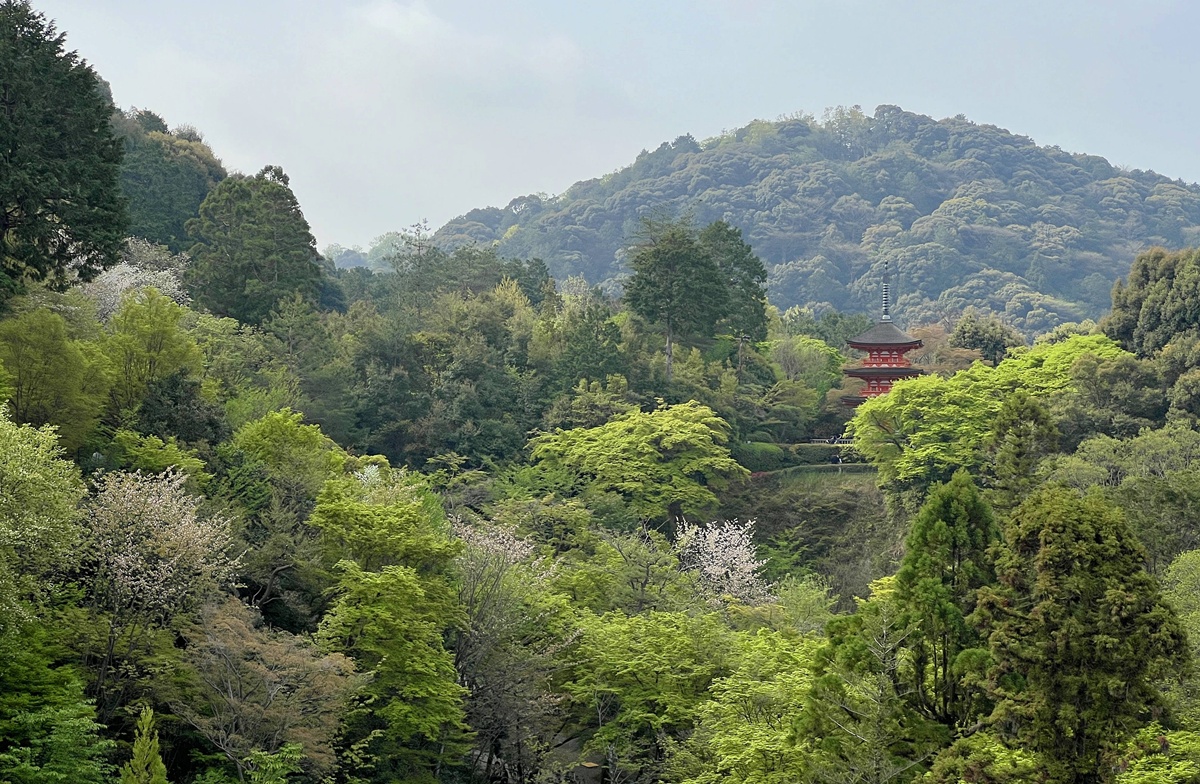
Kiyomizu-dera’s vivid vermilion Three-Story Pagoda is one of the temple’s most recognizable architectural features.
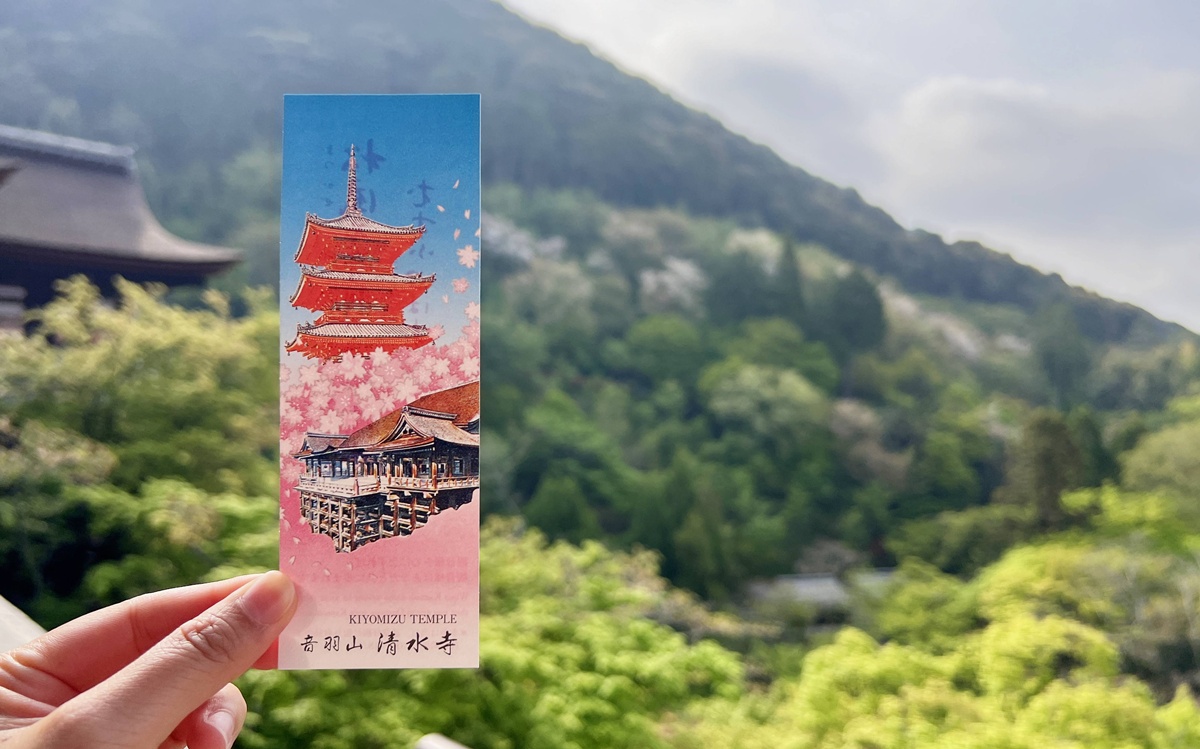
Its brilliant color contrasts with the surrounding forest, changing dramatically with the seasons. In spring, cherry blossoms soften the landscape; in autumn, red and golden leaves echo the pagoda’s warm tones.
Rather than photographing the tower from a single viewpoint, notice how its silhouette appears between rooftops and trees as you move through the grounds.
The pagoda is not merely a decorative landmark. It belongs to a Buddhist architectural tradition that has shaped the visual identity of Japanese temples for centuries.
4. Make a Wish at Otowa Waterfall
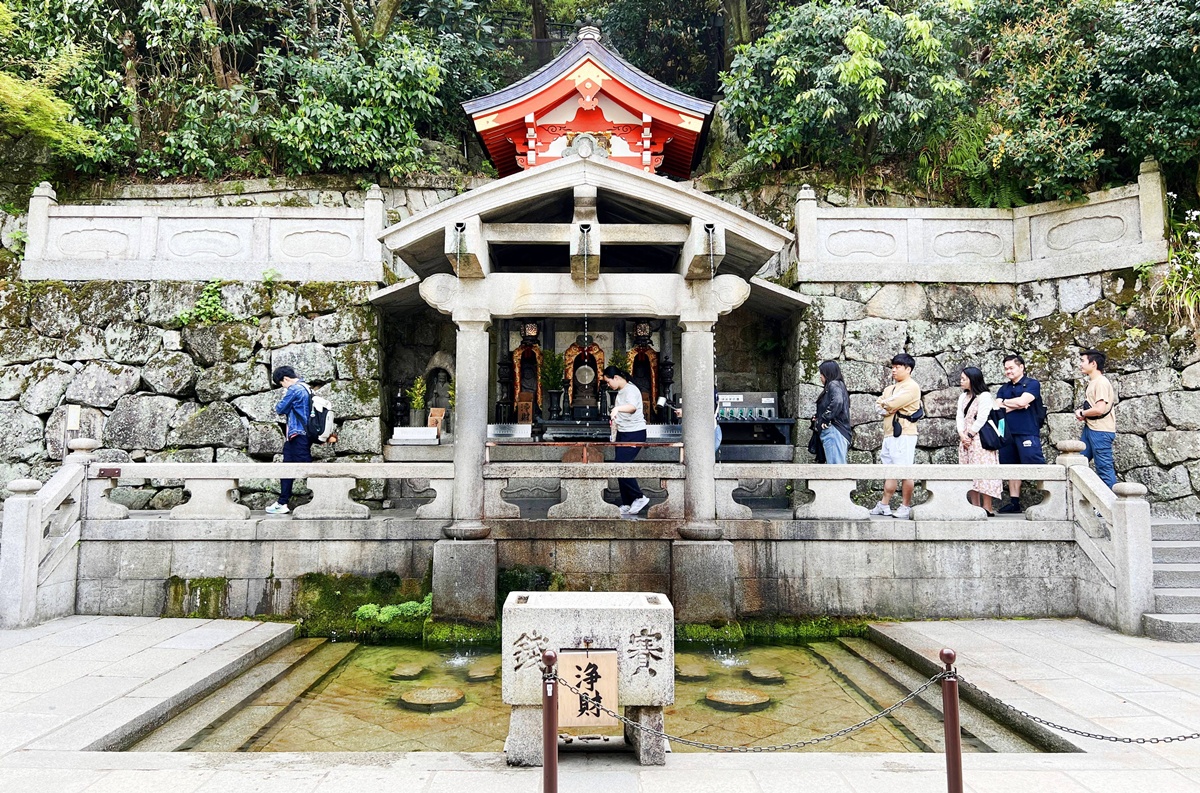
Kiyomizu-dera takes its name, meaning “Pure Water Temple,” from Otowa Waterfall, where three streams of sacred water flow from the mountain.
Visitors traditionally use long-handled cups to receive the water while making wishes. Popular folklore associates the streams with blessings such as longevity, academic success, and love.
Coming from Taiwan, where temple rituals often involve incense, offerings, and personal prayers, I find the simplicity of this practice particularly fascinating.
Here, a small gesture involving water becomes a meaningful expression of hope. Even if you choose not to participate, watching how visitors patiently approach the waterfall offers a glimpse into Japan’s living religious traditions.
5. See How the Seasons Transform the Same Temple
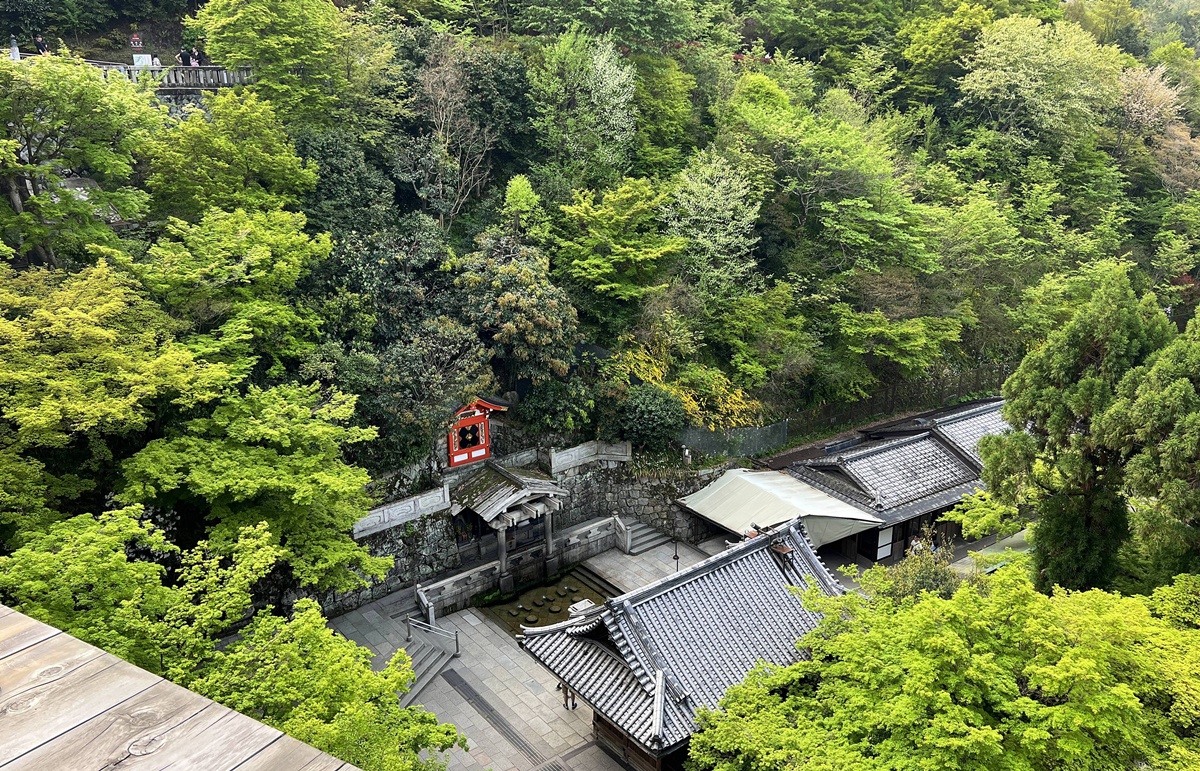
Kiyomizu-dera is worth revisiting because its surrounding landscape changes so dramatically throughout the year.
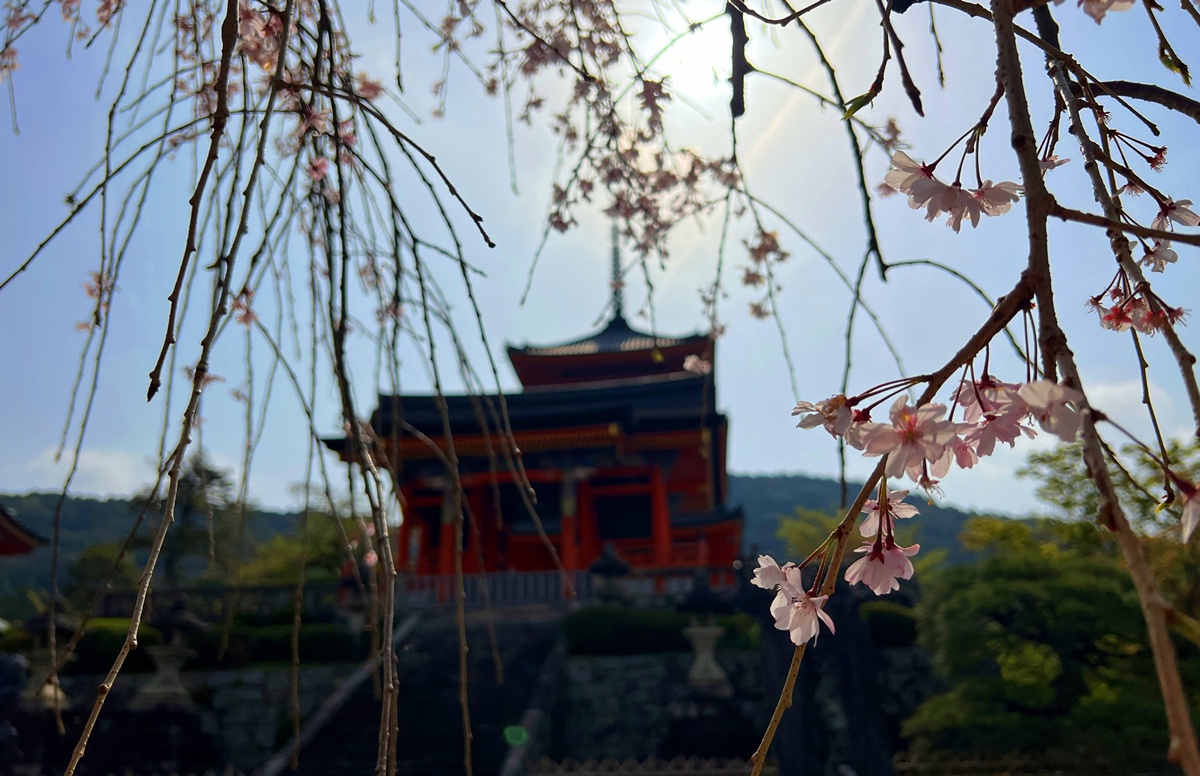
Spring brings cherry blossoms, summer covers the mountains in deep green, autumn fills the valley with fiery maple leaves, and occasional winter snowfall reveals the quiet beauty of its wooden architecture.
Yet the most interesting part is how the same building can create completely different experiences depending on when you visit.
In Kyoto, the seasons are not simply a backdrop for sightseeing. They influence how people experience familiar places and return to destinations they have already visited.
CJSCENE Tip: If you’ve already experienced Kyoto during cherry blossom season, consider returning in winter or early summer. The same temple may feel surprisingly unfamiliar.
6. Pause and Feel the Mountain Breeze
Not every memorable travel experience appears on a sightseeing map.
At Kiyomizu-dera, one of my favorites is simply standing on the wooden terrace and feeling the wind rise from the valley.
The mountains, elevated platform, and open wooden structure create a physical experience unlike walking through Kyoto’s narrow city streets.
Look toward the forest, listen to the footsteps around you, and then turn toward the distant city.
The temple is not merely an architectural monument placed in nature. Its mountain setting is part of what makes the experience meaningful.
Six Moments Along Kyoto’s Historic Higashiyama Streets
The journey doesn’t end when you leave Kiyomizu-dera.
Below the temple, the historic streets of Higashiyama reveal another side of Kyoto, where religious traditions, local craftsmanship, and contemporary tourism have developed alongside one another.
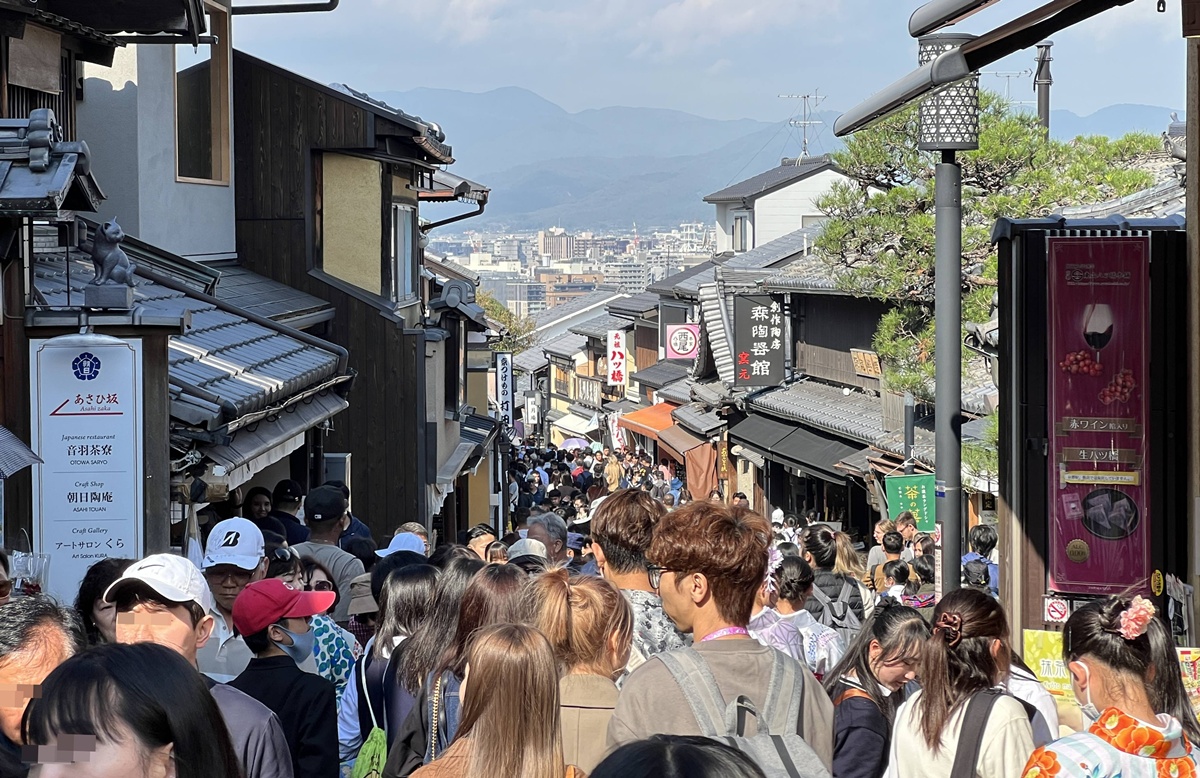
7. Discover Kyoto’s Traditional Crafts Along Kiyomizu-zaka
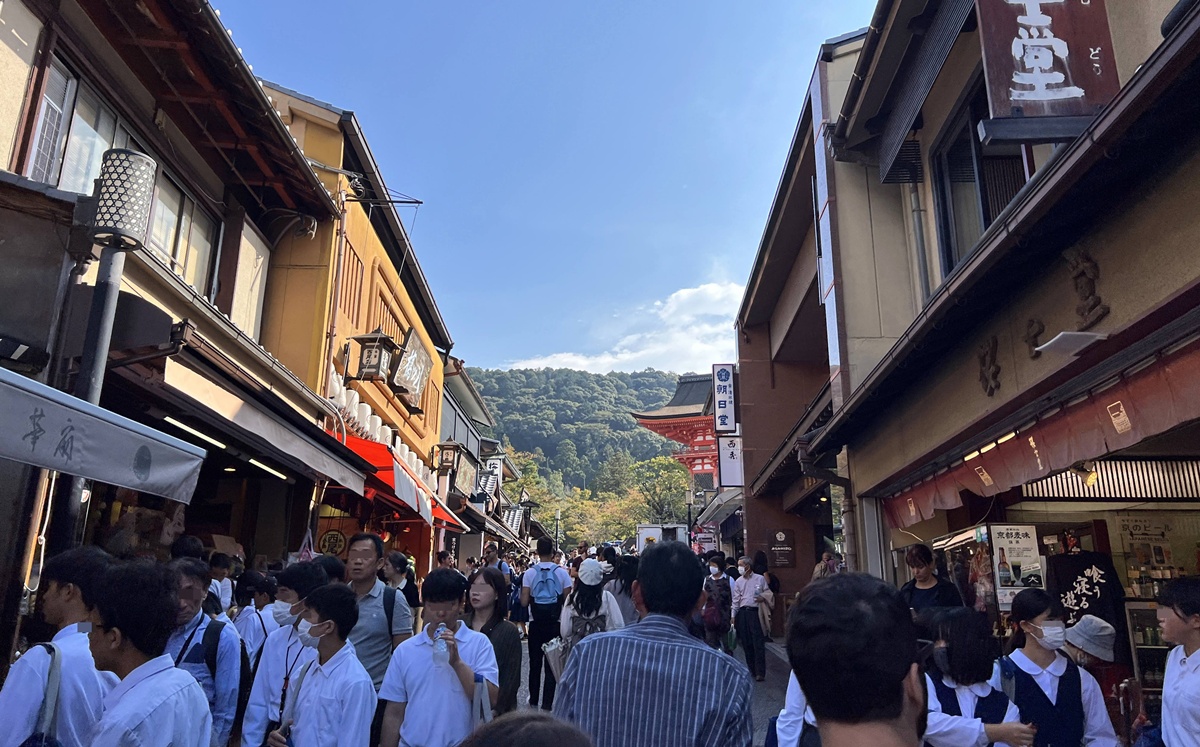
Kiyomizu-zaka is the lively shopping street leading toward the temple, filled with Japanese sweets, tea shops, pottery stores, and traditional crafts.
Among the most interesting discoveries is Kiyomizu-yaki, a pottery tradition closely associated with Kyoto.
The relationship between temples and local businesses is not new. For centuries, pilgrimage routes have supported merchants and craftspeople serving visitors traveling to religious destinations.
Today, Kiyomizu-zaka continues that relationship, although its businesses increasingly serve international travelers.
Instead of treating the street as a souvenir stop, look for the craftsmanship behind the objects on display.
8. Walk Slowly Through Sannenzaka
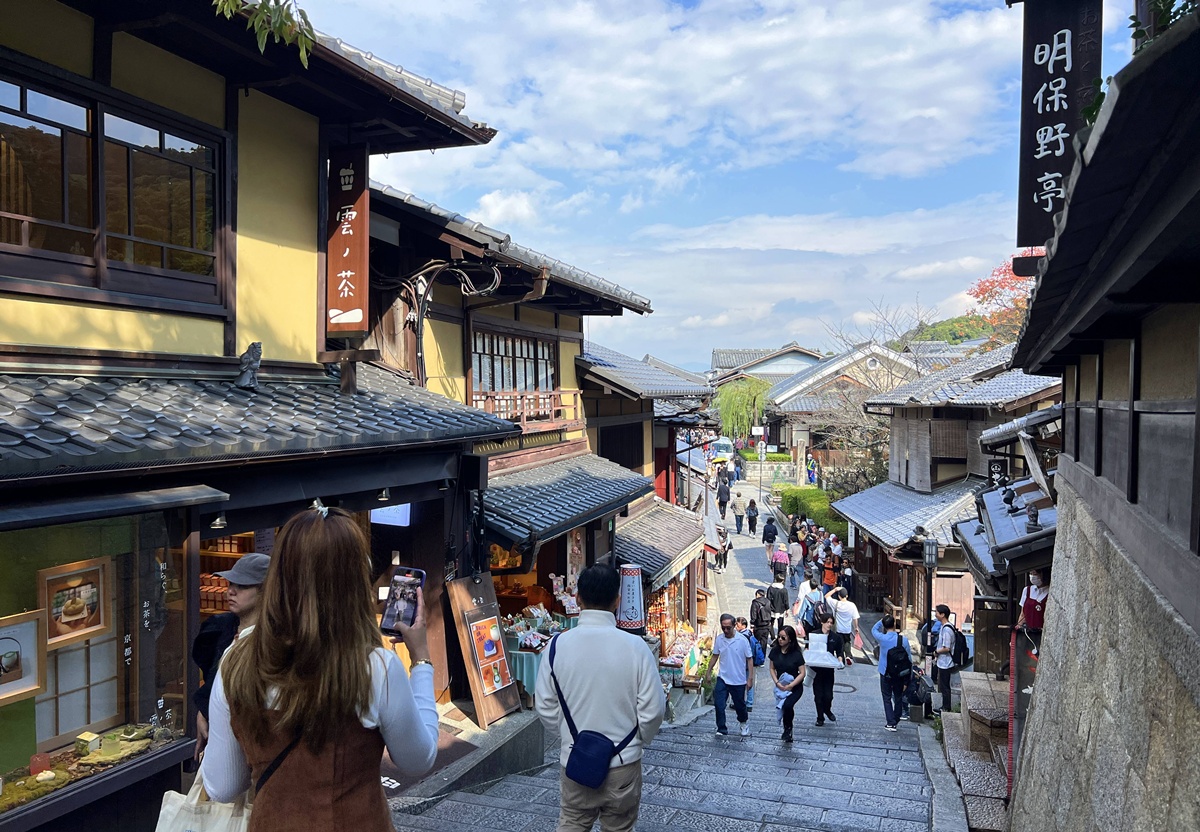
Sannenzaka is one of Kyoto’s most picturesque historic streets, with winding stone steps, wooden townhouses, traditional shops, and carefully preserved architectural details.
The street encourages a slower walking pace.
As the road curves, different views emerge between tiled rooftops, wooden lattice windows, and small storefronts.
Rather than focusing only on the famous staircase, pay attention to the materials and details that give the neighborhood its distinctive appearance.
In Kyoto, traditional architecture is not always something viewed behind museum walls. It can still be part of an ordinary shopping street.
9. Discover How Ninenzaka Keeps Old Kyoto Alive
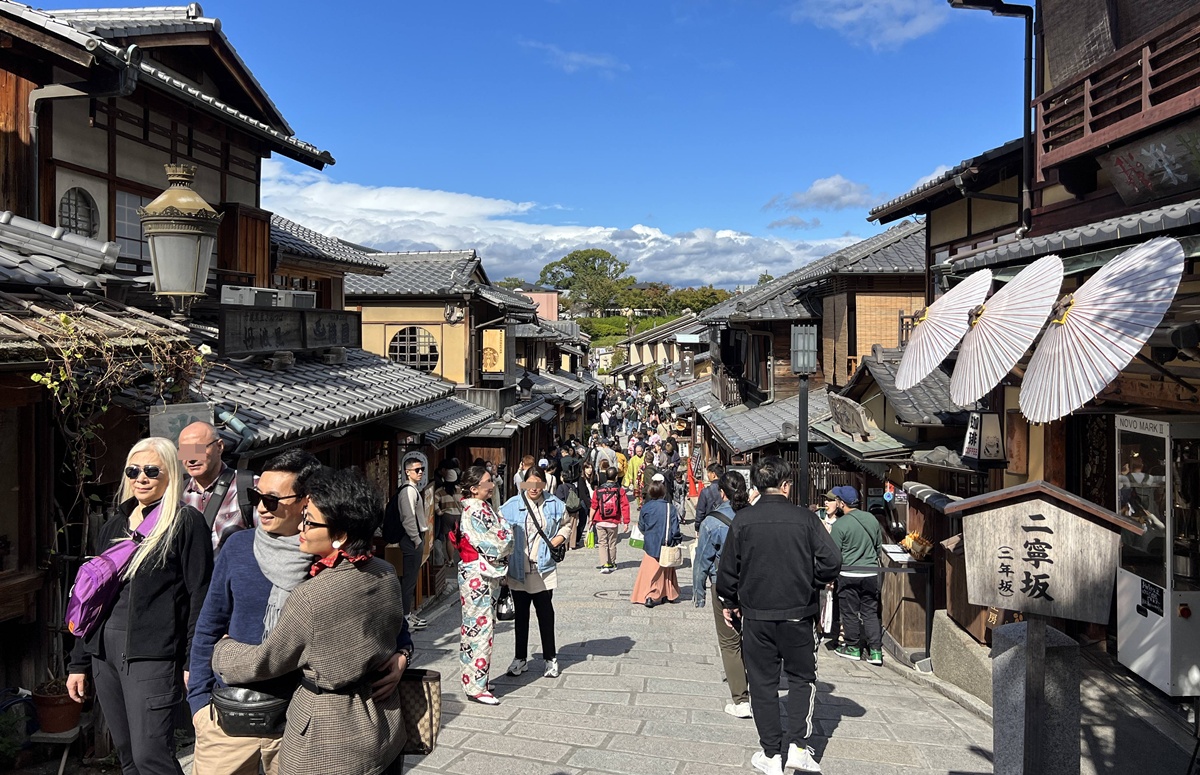
Ninenzaka is another beautifully preserved street in Higashiyama, known for its traditional machiya townhouses.
Many of these historic buildings now accommodate tea shops, cafés, confectionery stores, and small businesses.
What interests me most is how Kyoto allows some traditional buildings to remain useful in contemporary life.
Preservation does not always mean keeping a place unchanged. Sometimes, it means adapting old architecture to new purposes while retaining the character of the surrounding streetscape.
Of course, this balance is not without challenges, particularly as tourism continues to reshape the neighborhood.
But walking through Ninenzaka offers an opportunity to observe how Kyoto negotiates the relationship between heritage and modern commerce.
10. Find Kyoto’s Most Recognizable View at Yasaka Pagoda
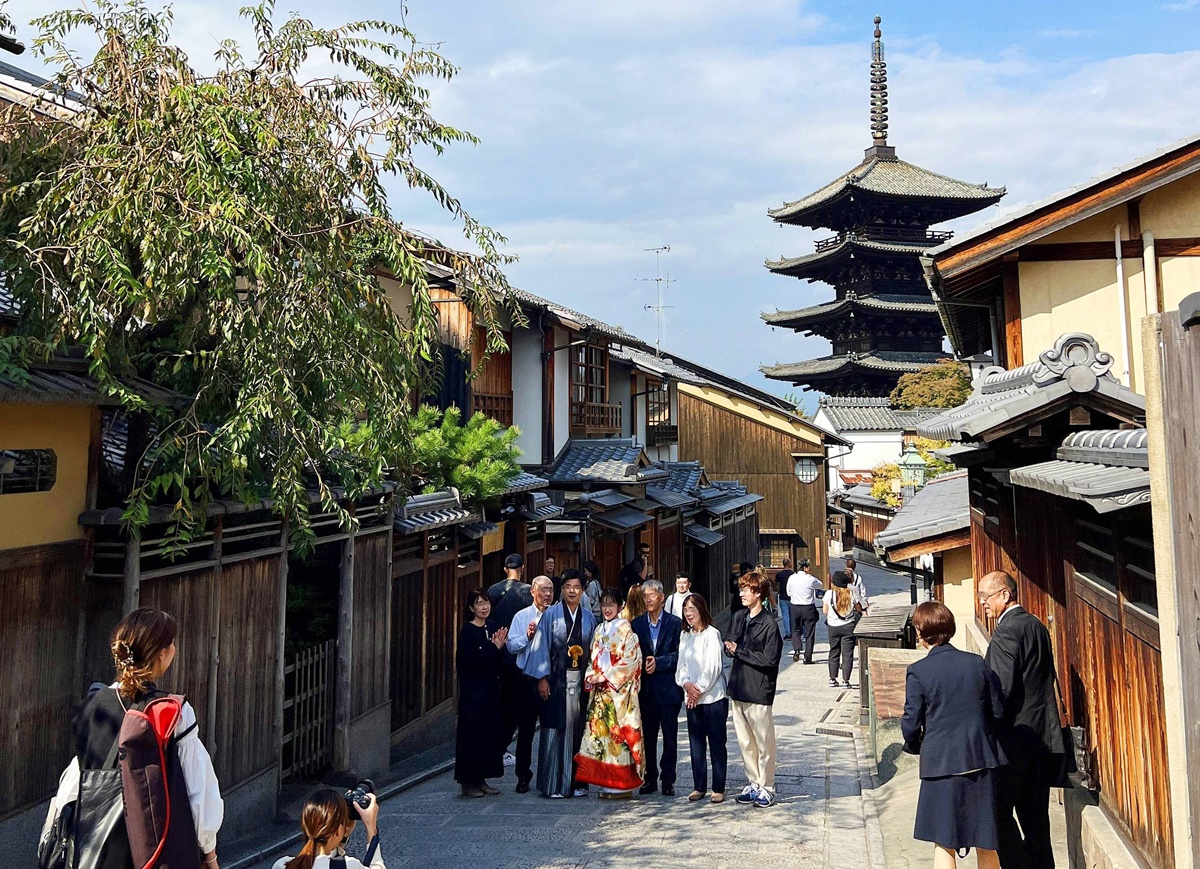
Rising above the traditional rooftops of Higashiyama, Yasaka Pagoda is one of Kyoto’s most recognizable landmarks.
The five-story pagoda belongs to Hokan-ji Temple and can be photographed from the surrounding historic streets, particularly along Yasaka-dori.
Yet what makes this view memorable is not simply the tower itself.
It is the relationship between the pagoda and the neighborhood surrounding it.
The narrow street, wooden houses, tiled roofs, and distant tower form a scene that reflects how religious architecture has shaped Kyoto’s urban landscape.
CJSCENE Tip: Visit in the late afternoon for beautiful light, but remain mindful of pedestrians and residents when taking photographs.
11. Experience Kyoto’s Shinto Traditions at Yasaka Shrine
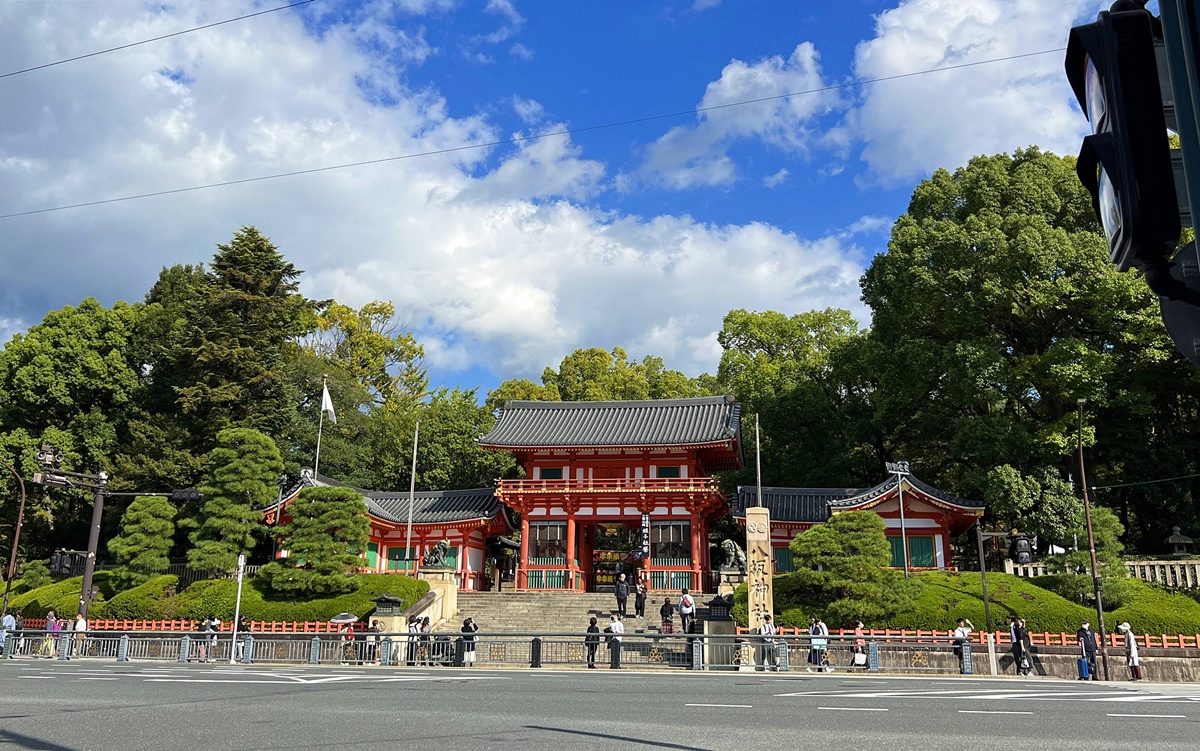
Continuing downhill toward Gion, Yasaka Shrine offers a different perspective on Kyoto’s religious culture.
While Kiyomizu-dera is a Buddhist temple, Yasaka Shrine belongs to Japan’s Shinto tradition and is closely associated with the famous Gion Festival.
Visiting both places on the same walking route reveals how different religious traditions coexist within the city.
For travelers unfamiliar with Japanese culture, this distinction is worth noticing.
The architecture, rituals, and religious identities differ, yet both traditions remain deeply connected to Kyoto’s cultural landscape.
12. Return to Higashiyama After Dark
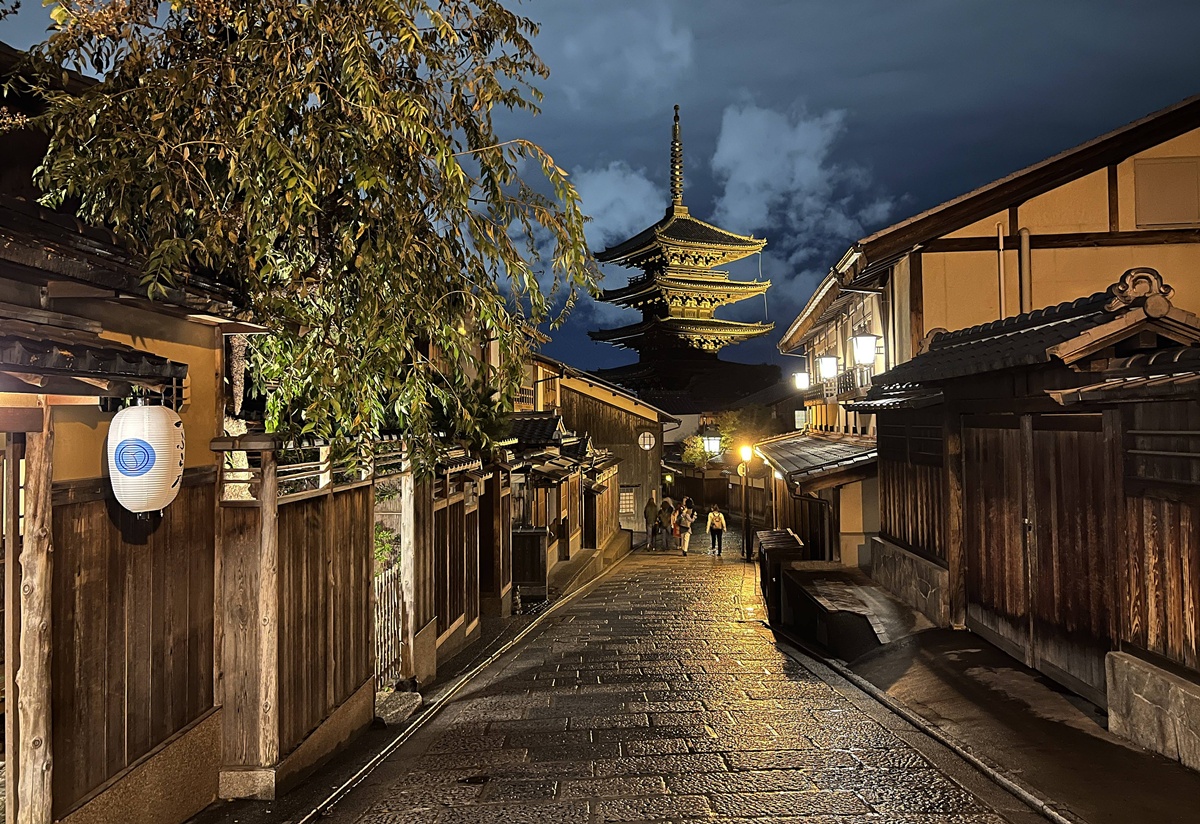
During the day, Sannenzaka and Ninenzaka are among Kyoto’s busiest sightseeing streets.
After the shops close and the crowds begin to disappear, the same neighborhood takes on a completely different atmosphere.
Stone pathways become quieter, wooden facades turn into silhouettes, and the curves of the narrow streets become more noticeable.
This is one of my favorite ways to experience Kyoto.
Not because there is another attraction to visit, but because returning to the same place at a different time reveals something daytime sightseeing cannot.
CJSCENE Tip: Most shops will be closed, and some streets are dimly lit. Keep noise to a minimum and respect the residents who live in this historic neighborhood.
How to Experience Kiyomizu-dera Differently: A Higashiyama Walking Route
Rather than rushing between famous landmarks, I recommend experiencing Kiyomizu-dera and Higashiyama through three different moments of the day.
Early Morning | Kiyomizu-dera Temple
Arrive around 6:00–8:00 AM to experience the temple before the busiest crowds. Spend time on the wooden stage, visit Otowa Waterfall, and appreciate the surrounding mountain scenery.
Late Morning to Afternoon | Sannenzaka and Ninenzaka
Walk downhill through Kiyomizu-zaka, Sannenzaka, and Ninenzaka. Browse pottery shops, discover traditional townhouses, and stop for Japanese tea or sweets. Continue toward Yasaka Pagoda and Yasaka Shrine.
Evening | Gion and Historic Higashiyama
Explore Gion as the city transitions into evening. If your schedule allows, return to the quieter historic streets after the shops have closed.
Suggested Route: Kiyomizu-dera → Kiyomizu-zaka → Sannenzaka → Ninenzaka → Yasaka Pagoda → Yasaka Shrine → Gion.
Recommended Duration: Half a day for the main sights, or a full day if you want to explore at a slower pace.
Final Thoughts: The Journey Is Part of the Temple
What makes Kiyomizu-dera memorable is not only its wooden stage, sacred waterfall, or magnificent seasonal scenery.
It is how these elements remain connected to the streets and everyday life surrounding the temple.
The mountain provides the setting for a sacred place. The temple attracts generations of worshippers. The pilgrimage routes support traditional shops and craftspeople. And the surrounding neighborhood continues to evolve as Kyoto welcomes visitors from around the world.
Walking from Kiyomizu-dera through Sannenzaka and Ninenzaka, you begin to recognize that Kyoto’s cultural heritage does not exist only behind temple gates.
It continues in the architecture of ordinary streets, in the gestures of people making wishes, and in the businesses that have grown around places of worship.
Sometimes, discovering Kyoto means paying attention not only to what has survived for centuries, but also to how people continue to live alongside it today.
Japan Travel Guides, Seen Through Taiwanese Eyes.
[blogimove-CPC-SEARCHTITLE=Japan Beyond the Familiar-MODE=7-POSTNUM=1-ORDERBY=date-ORDERTYPE=desc]
— CJSCENE
⏰CJ夫人專屬訂購優惠 訂房優惠| booking特別優惠 | agoda今日優惠|日本樂天旅遊限時優惠 機票優惠| Trip.com獨家優惠 Agoda期間限定秋日優惠活動:即日起~10.31 23:59:59(適用入住日期:至 2027年9月) 點擊以下訂房連結,享新客88折/舊客94折 ✅【AGODA12ALL】:新用戶享88折,最高折抵30美元 ✅【AGODA6TW】:舊用戶享94折(限台灣地區),最高折抵30美元 ✅部分房源超級促銷:原本已有折扣,用戶使用優惠碼後可額外再享 6% 折扣 促銷活動網址:agoda限時優惠 |